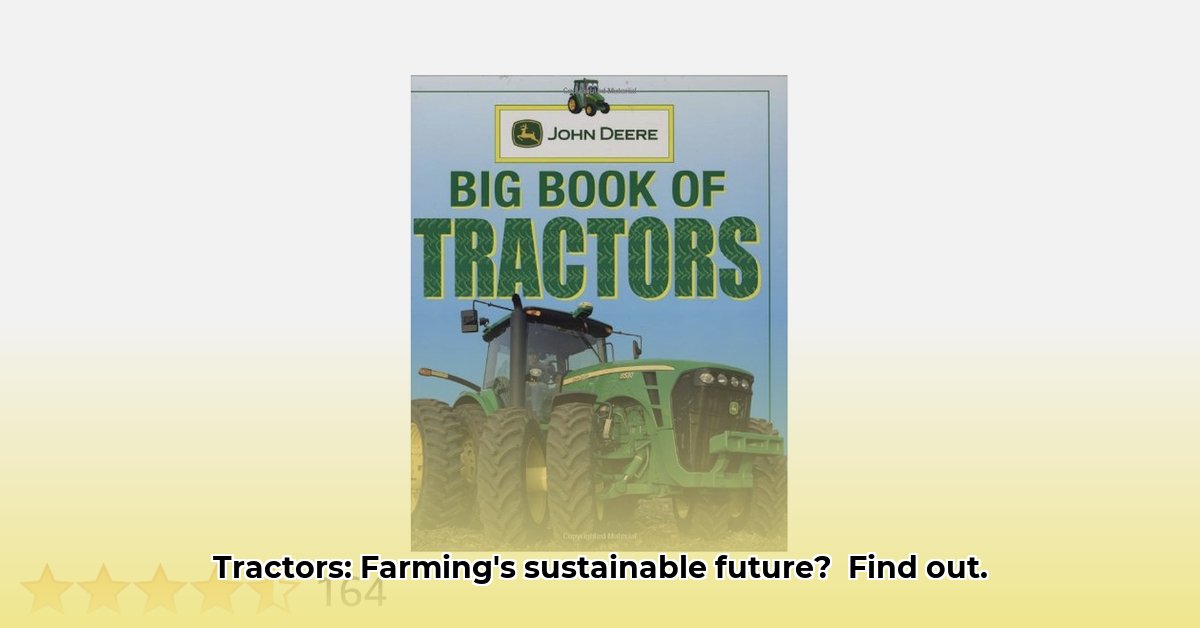
Books About Tractors: A Journey Through Sustainable Farming's Past, Present, and Future
The history of the tractor is intrinsically linked to the evolution of food production and our relationship with the planet. This isn't merely a story of mechanical innovation; it's a narrative woven into the pages of countless books exploring these powerful machines and their impact on sustainable farming practices. From the steam-powered behemoths of the past to the high-tech marvels of today, the journey reveals a complex interplay of progress and environmental responsibility. How have these technological advancements shaped our methods of cultivation, and what does the future hold for sustainable agriculture? For more information on different tractor types, check out this helpful resource: Tractor Types.
The Early Days: When Tractors Were Titans
Prior to the widespread adoption of tractors, farming was intensely labor-intensive, relying heavily on human and animal power. Plowing fields was a slow, arduous process. The late 1800s witnessed the emergence of steam-powered tractors – massive, inefficient machines. While early accounts might depict them as revolutionary, they were expensive to operate, demanded skilled labor, and were difficult to maneuver. Nevertheless, these clumsy giants represented a pivotal moment, foreshadowing a future where machinery would transform agriculture. Isn't it remarkable to consider the sheer scale of this early technological leap?
The Internal Combustion Engine: A Revolution in the Fields
The introduction of the internal combustion engine marked a turning point. Tractors shrank in size and weight, becoming more affordable and user-friendly. Books from the early to mid-20th century illustrate this dramatic shift – a move towards greater efficiency and accessibility. Farmers could now cultivate significantly larger areas in much shorter timeframes, leading to a substantial increase in crop yields. This wasn’t simply a matter of enhanced efficiency; it fundamentally altered agricultural practices. Did this increased productivity inadvertently sow the seeds of future environmental challenges?
The Post-War Boom: A Double-Edged Sword?
The post-World War II era witnessed an explosion in tractor production. Once a luxury, tractors became commonplace, fueling a surge in farm productivity and economic prosperity. Many historical accounts depict this period as a golden age of agricultural advancement. However, this rapid expansion came at a cost. The rise of large-scale monoculture farming – the cultivation of vast tracts of land with a single crop – reduced biodiversity, depleted soil nutrients, and increased dependence on chemical fertilizers and pesticides. This raises a critical question: how do we balance the benefits of increased yields with the need for environmental stewardship?
The Environmental Awakening: Facing the Consequences
Contemporary literature on tractors often grapples with the environmental consequences of this agricultural revolution. The widespread use of fossil fuel-powered tractors significantly contributes to greenhouse gas emissions. Heavy machinery compacts soil, hindering water retention and nutrient absorption. This has led to increased soil erosion and water pollution. These concerns highlight the urgent need to re-evaluate our agricultural practices and explore more sustainable alternatives.
Innovation for a Sustainable Future: New Directions
Despite the challenges, the agricultural sector, scientists, and engineers are actively pursuing solutions. Modern texts often showcase remarkable technological advancements geared towards sustainability. There's a growing emphasis on fuel-efficient engines, alternative fuel sources like biodiesel and hydrogen, and the burgeoning field of precision agriculture. Precision agriculture leverages GPS, sensors, and data analysis to optimize resource allocation, minimizing waste and environmental impact, prompting the question: Can precision agriculture truly bridge the gap between technological advancement and environmental sustainability?
The Human Side of the Story: Farmers and Their Machines
The human element is paramount in the tractor narrative. Many books illuminate the lives of farmers, capturing their struggles, resilience, and deep-rooted connection to the land and their machines. These machines are not simply tools; they represent a partnership forged over generations, a testament to the enduring relationship between humanity and technology.
Looking Ahead: A Sustainable Future for Tractors?
The future of sustainable farming hinges on continuous innovation and collaboration. The development of electric tractors, autonomous vehicles, and advanced soil management techniques offers a path towards a more environmentally responsible agriculture. However, this transition must be inclusive, ensuring that farmers of all scales can participate in and benefit from these advancements. The economic and social implications are as critical as the environmental ones. What policies and infrastructural changes are needed to ensure a just and equitable transition?
Working Together for a Greener Future: Actionable Steps
This transition requires a concerted effort from all stakeholders. Here are some critical actions needed to move towards truly sustainable farming practices.
- Farmers: Adopt fuel-efficient tractors, explore precision agriculture, and invest in alternative fuel technologies.
- Researchers: Prioritize research into sustainable agricultural technologies and alternative fuel sources.
- Policymakers: Provide financial incentives for sustainable farming practices and implement stricter emission standards for agricultural equipment.
The narrative of tractors is an ongoing story, reflecting our collective journey towards a more responsible and sustainable relationship with the planet. The books documenting this journey will continue to illuminate the path toward a world where food security and environmental stewardship coexist.